How to Choose the Perfect Wedding Venue
Your venue is the single biggest decision in wedding planning — it determines your date, your budget allocation, your guest count cap, and the entire aesthetic of your celebration. Roughly 40-50% of your total budget will go toward the venue and catering, making this choice the foundation upon which everything else is built.
The right venue doesn't just look beautiful in photos; it works logistically, fits your budget, and feels like "you" when you walk through the doors. Here's how to find that perfect match.
Before You Start Looking
Define Your Non-Negotiables
Before touring a single venue, sit down together and answer these questions:
- Guest count range — What's your minimum and maximum? Venues have capacity limits that will immediately narrow your search
- Indoor, outdoor, or both? — Do you need a weather backup plan?
- Geographic area — How far will your guests reasonably travel?
- Season and timing — Summer outdoor garden, winter ballroom, fall vineyard?
- Budget ceiling — What's the absolute maximum you'll spend on venue + catering combined?
Identify Your Style
Your venue should match the vibe you envision:
- Classic elegance — Ballrooms, historic estates, luxury hotels
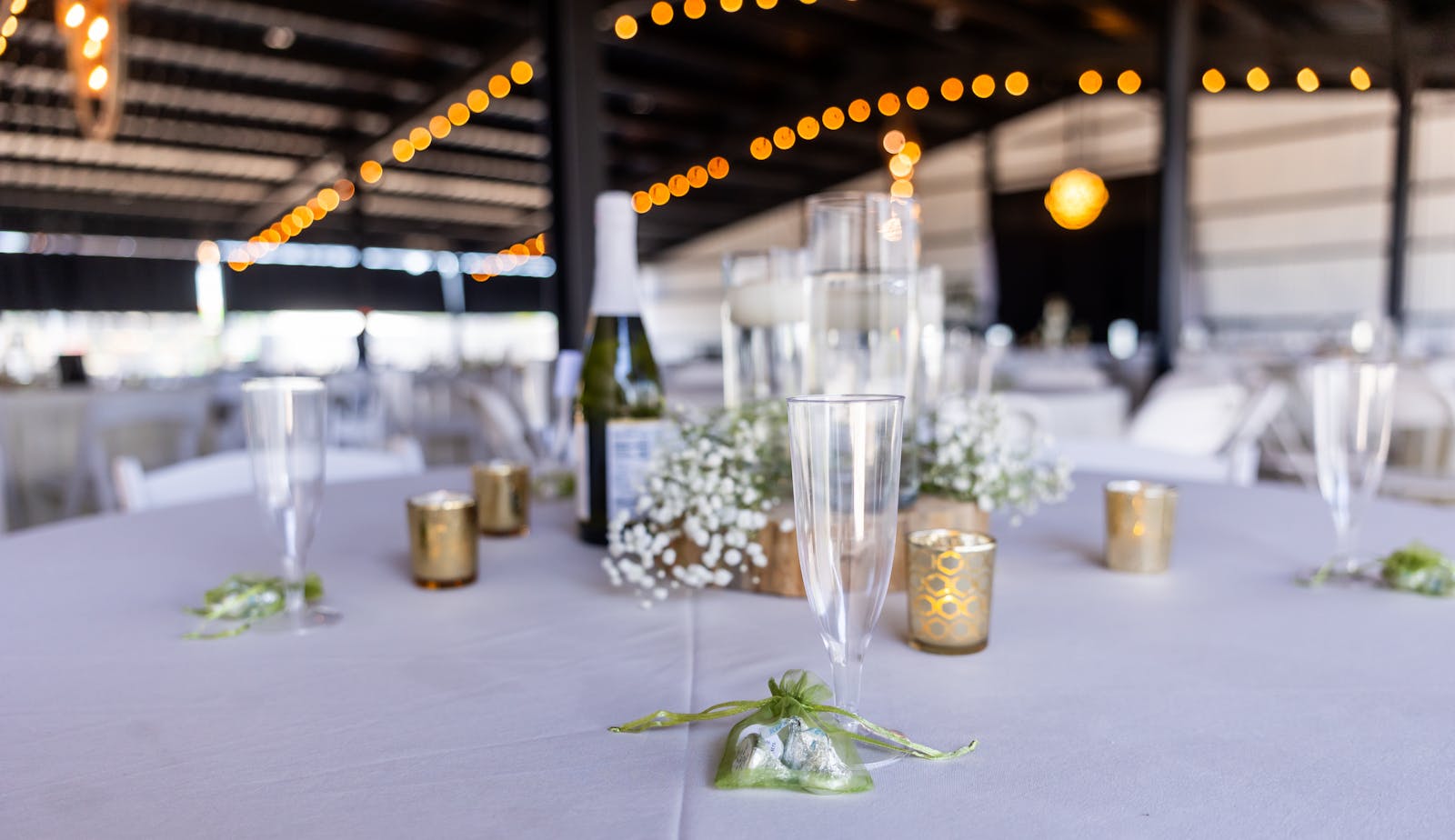
- Rustic charm — Barns, vineyards, farmhouses, country estates
- Modern minimal — Art galleries, loft spaces, rooftop venues
- Natural beauty — Gardens, beaches, mountain lodges, lakeside
- Cultural significance — Houses of worship, cultural centers, heritage sites
What to Ask During Venue Tours
The Essential Questions
Never leave a venue tour without answers to these:
- What's included in the rental fee? Tables, chairs, linens, setup, teardown, parking?
- Is catering in-house or can we bring our own? In-house is simpler; outside catering gives flexibility but often costs more
- What are the noise restrictions? Outdoor venues especially may have time cutoffs
- What's the rain plan? For outdoor venues, is there an indoor backup? At what cost?
- How many hours does the rental include? When does setup time start? When must everything be cleared out?
- What are the overtime charges? Weddings often run long — know the cost before it happens
- Can we see it set up for a wedding? Photos are helpful, but seeing the actual room with tables and chairs reveals the true feel
- Who is the day-of coordinator? Many venues provide one — meet them if possible
- What's the deposit and payment schedule?
- What's the cancellation/postponement policy? Important in an unpredictable world
Hidden Costs to Watch For
- Service charges — Often 18-22% added on top of the per-person catering rate
- Valet or parking fees — Some venues charge guests for parking
- Cake cutting fees — Charged per slice for cakes brought from outside bakers
- Corkage fees — If you bring your own alcohol
- Generator rental — For outdoor venues that need power brought in
- Tent rental — Rain plans aren't always free
- Liability insurance — Some venues require you to purchase a policy
Comparing Your Top Choices
Create a Venue Scorecard
Rate each venue on these factors (1-10 scale):
| Factor | Weight | Why It Matters |
|---|---|---|
| Overall aesthetics | High | Does it make your heart sing? |
| Location & accessibility | High | Can elderly guests and those with disabilities access it easily? |
| Capacity fit | Critical | Too big feels empty; too small feels cramped |
| Budget alignment | Critical | All-in cost, not just the rental fee |
| Catering quality | High | Taste the food before committing |
| Flexibility | Medium | Can you customize, bring vendors, extend hours? |
| Parking & transport | Medium | Especially for suburban or rural venues |
| Day-of coordination | Medium | Built-in coordinator is a huge stress reducer |
| Photo opportunities | Medium | Scenic spots for couple photos and group shots |
The Gut Check
After visiting your top 3-5 venues, pay attention to how you felt when you walked in. Did you immediately envision your wedding there? Could you picture your family and friends filling the space? Trust that emotional response — it matters as much as the spreadsheet.
Venue Types Deep Dive
Hotels
Pros: All-in-one (ceremony, reception, accommodations), professional staff, weather-proof, often include coordination services.
Cons: Can feel generic, limited decoration flexibility, often more expensive per person.
Best for: Couples who want convenience and don't want to coordinate multiple vendors for basics.
Barns & Rustic Venues
Pros: Incredible atmosphere, great photo opportunities, unique and memorable.
Cons: May lack climate control, limited restroom facilities, often require more vendor coordination.
Best for: Couples who love a countryside aesthetic and don't mind a bit more planning work.
Destination Venues
Pros: Built-in mini-vacation for guests, stunning backdrops, intimate guest lists.
Cons: Higher cost for travel, complex logistics, some guests may not be able to attend.
Best for: Couples who prioritize experience over headcount.
Restaurants
Pros: Excellent food guaranteed, intimate atmosphere, often very affordable, professional service staff.
Cons: Space limitations, decor restrictions, may need to buy out the venue.
Best for: Foodies, small weddings, and couples who want a relaxed celebration.
Booking and Contract Tips
Read Every Line
Your venue contract should clearly state:
- Exact date and time frame (including setup and cleanup)
- Detailed cost breakdown with all fees listed
- Payment schedule and accepted methods
- Cancellation and postponement terms
- What happens if the venue can't host (renovation, damage, etc.)
- Noise and decoration restrictions
- Vendor access rules and timing
Negotiate Wisely
Many venues have flexibility, especially for:
- Off-peak dates (Sunday, Friday, winter months)
- Minimum guarantees on guest counts
- Upgrades or add-ons thrown in for free
- Extended hours at a reduced rate
Lock It In Early
Popular venues book 12-18 months in advance. If you find one you love, don't wait too long — especially for peak season Saturday dates.
Final Thoughts
The perfect venue is the one that fits your vision, your budget, and your guests' comfort. Don't chase Instagram-perfect venues if they don't match your reality. A beautiful celebration can happen anywhere — what makes it special is the love, the people, and the atmosphere you create together.