What Is a Unity Ceremony?
A unity ceremony is a symbolic ritual performed during a wedding that represents two individuals becoming one partnership. These rituals add depth, meaning, and a visual moment to your ceremony that photographs beautifully and resonates emotionally with guests.
Unity ceremonies are not legally required — they are entirely optional additions that personalize your celebration. They work in religious and secular ceremonies alike, and many can be adapted to include children, parents, or the entire community.
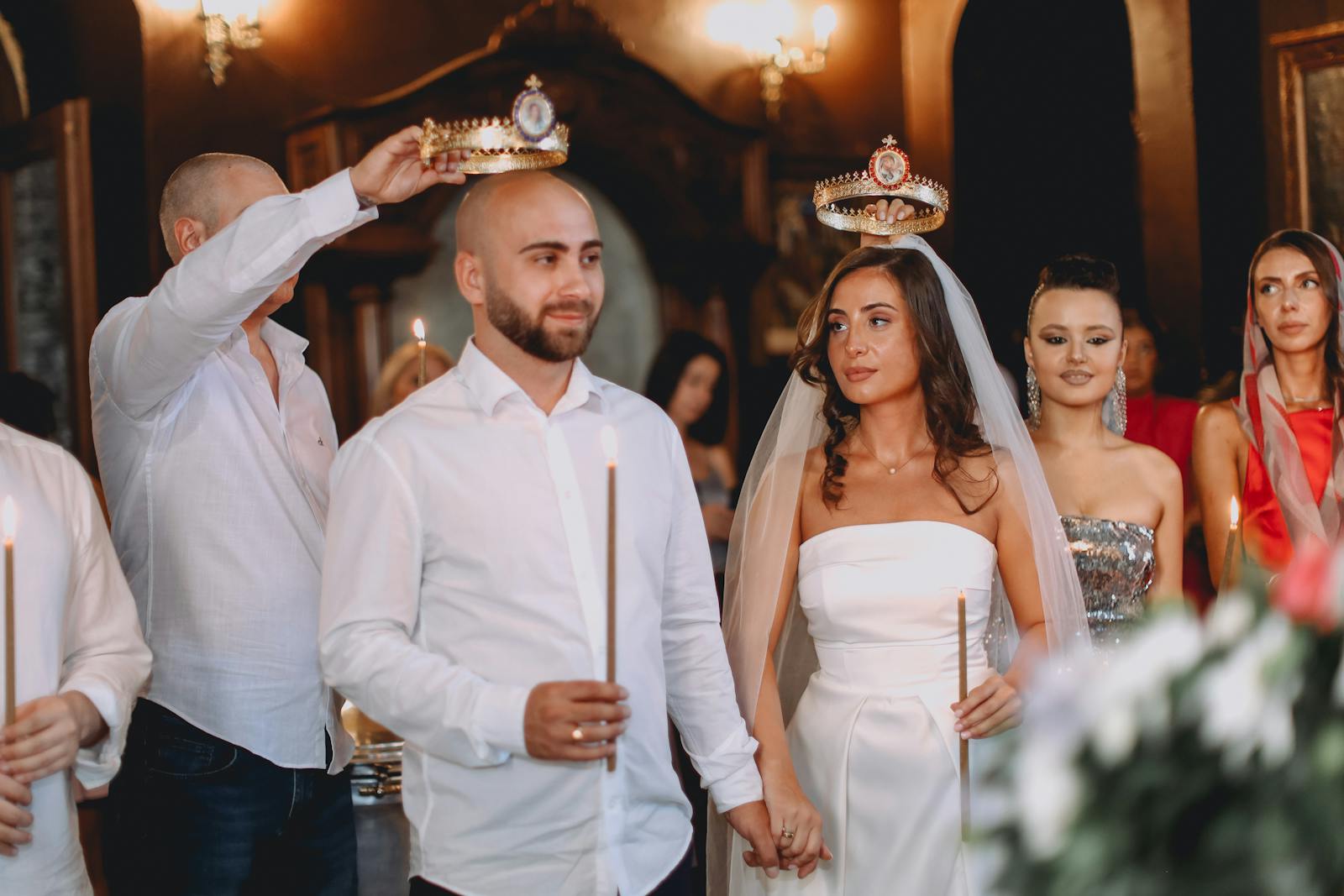
Unity Candle Ceremony
How It Works
Three candles are arranged at the altar: two taper candles on the outside and one large pillar candle in the center. Each partner lights one taper candle individually, then together they use both tapers to light the center pillar candle. The individual candles may be left burning or extinguished, depending on your preference.
What It Symbolizes
The individual candles represent each person''s life, family, and experiences before the marriage. The center candle represents the new shared life. Leaving the individual candles lit symbolizes that each person retains their identity within the marriage.
Practical Considerations
- Wind: Unity candles struggle outdoors. Even a light breeze can make lighting impossible and create an awkward moment. If your ceremony is outdoors, have a glass hurricane or choose a different ritual
- Timing: The lighting takes about 2-3 minutes including any readings
- Who participates: Mothers of the couple often light the individual candles at the start of the ceremony, adding another layer of symbolism — the family''s light passing to the new couple
- Religious connection: Common in Catholic and Protestant ceremonies, where the flame represents the light of Christ or the Holy Spirit
Sample Reading
"Now these two lights shall merge into one as a symbol of the union of two lives into one. May the radiance of this one light illuminate your path through life together."
Sand Ceremony
How It Works
Two containers of differently colored sand are poured simultaneously into a single larger vessel. The colors blend together in unique, unrepeatable patterns. Some couples add a third color to represent children, or invite parents to pour their own colors.
What It Symbolizes
Once the sand is combined, the individual grains cannot be separated — just as the two lives are now permanently intertwined. The unique pattern created is one of a kind, just like the marriage itself.
Practical Considerations
- Weather-proof: Unlike candles, sand works perfectly outdoors in any weather condition
- Colors: Choose colors that match your wedding palette or have personal significance. White and deep blue, gold and burgundy, or any combination that appeals to you
- Container: The vessel becomes a keepsake you display in your home. Choose something beautiful — a decorative vase, a shadow box frame, or a custom bottle
- Pour speed: Practice pouring at a similar rate to create the best blended effect
- Involving children: Give each child their own color. This is especially meaningful in blended families where the ceremony represents a new family forming
- Timing: Takes about 3-5 minutes depending on how many people participate
Variations
Painted sand: Some couples use painted sand in neon or pastel colors for a more dramatic visual effect.
Unity salt: Similar concept using sea salt, which can carry symbolism about preservation and flavor in the marriage.
Handfasting
How It Works
The couple''s hands are bound together with ribbons, cords, or fabric while vows are spoken. This ancient Celtic tradition is the origin of the phrase "tying the knot." Different colored cords can represent different promises or values.
What It Symbolizes
The physical binding represents the couple''s commitment to be joined together. Each cord or ribbon can carry its own meaning:
- White: Purity, devotion, peace
- Blue: Patience, sincerity, tranquility
- Red: Passion, strength, vitality
- Green: Prosperity, growth, abundance
- Gold: Wisdom, longevity, unity
- Purple: Spiritual fulfillment, power, sanctity
Practical Considerations
- Officiant needed: Someone needs to wrap the cords while you hold hands, so coordinate with your officiant or designate a family member
- Practice: Do a run-through so the wrapping looks graceful, not fumbling
- Length of cords: Each ribbon should be about 6 feet long for comfortable wrapping with trailing ends
- Afterward: The bound cords make a beautiful keepsake to frame or display
- Cultural sensitivity: Handfasting comes from Celtic pagan traditions. If incorporating it into a religious ceremony, discuss with your officiant to ensure respectful integration
Wine or Communion Ceremony
How It Works
The couple shares a cup of wine, either as a religious sacrament (communion) or as a secular symbol of shared experiences. In Jewish tradition, wine is shared under the chuppah as part of the Sheva Brachot (Seven Blessings).
What It Symbolizes
Sharing a single cup represents the commitment to share all of life''s experiences — both the sweet and the bitter. In religious contexts, it carries additional significance of divine blessing.
Variations
Wine blending: Two different wines are poured into a single glass, then tasted by both partners. The new blend represents the unique combination of two lives.
Whiskey ceremony: The couple seals a bottle of whiskey in a box along with love letters. They open it on a future anniversary to share the whiskey and read the letters.
Tree Planting Ceremony
How It Works
Together, the couple plants a sapling in a pot of soil, each adding soil and water. The tree is later planted at their home.
What It Symbolizes
Like a marriage, a tree requires nurturing, patience, and care to grow strong. The roots represent the foundation of the relationship, the trunk represents strength, and the branches represent growth in new directions.
Practical Considerations
- Choose a hearty species: Pick a tree that will thrive in your climate and can survive being in a pot for the day
- Logistics: Have a tarp or protective covering under the pot to protect venue floors
- Make it meaningful: Some couples use soil from each partner''s childhood home or a meaningful location
- Long-term: The tree becomes a living symbol of your marriage that grows alongside your relationship
Choosing Your Unity Ceremony
| Ceremony | Best For | Weather | Guest Involvement | Keepsake |
|---|---|---|---|---|
| Unity Candle | Traditional, indoor | Indoor only | Parents can light tapers | Candle display |
| Sand Ceremony | All venues, blended families | Any weather | Children, parents | Sand vessel |
| Handfasting | Celtic-inspired, rustic | Any weather | Limited | Bound cords |
| Wine/Communion | Religious, intimate | Any weather | Limited | Wine box |
| Tree Planting | Eco-conscious, outdoor | Outdoor preferred | Can add soil | Living tree |
Making It Personal
The most meaningful unity ceremonies are adapted to reflect who you are as a couple. Craft beer enthusiasts have done beer blending ceremonies. Artists have painted on a shared canvas. Musicians have played a duet. Bakers have mixed ingredients for a future cake.
Think about what represents your relationship. The ritual does not need to come from a tradition — it just needs to come from the heart.