Choosing How to Feed Your Guests
The dining format shapes the entire feel of your reception. A plated dinner creates formal elegance, a buffet encourages casual mingling, and food stations offer interactive variety. Each has distinct advantages depending on your style, budget, and guest count.
Plated Dinner
How It Works
Guests are served individual courses at their tables by waitstaff. Typically includes an appetizer or salad, entree with sides, and dessert.
The Pros
Elegant and controlled. A plated dinner has a rhythm — each course arrives on schedule, creating a structured dining experience. It is the most formal option and sets a sophisticated tone.
Predictable portions. Every guest receives the same amount of food, so there is no risk of running short.
Better for timeline management. You control when each course is served, making it easier to coordinate toasts, dances, and other reception events between courses.
Less food waste. Since portions are pre-determined, caterers can prepare more accurately.
The Cons
Higher cost per person. Plated dinners require more waitstaff, more precise kitchen timing, and higher-quality individual presentations.
Limited choice. Guests typically choose from 2-3 entree options. Those with specific preferences may not find something they love.
Dietary accommodation challenges. Each dietary restriction requires a separate plate preparation, which increases complexity and cost.
Longer meal time. A three-course plated dinner takes 90 minutes or more, which reduces dancing and socializing time.
Best For
Formal weddings, smaller guest counts (under 150), venues with professional kitchen staff, and couples who want a controlled, elegant dining experience.
Buffet
How It Works
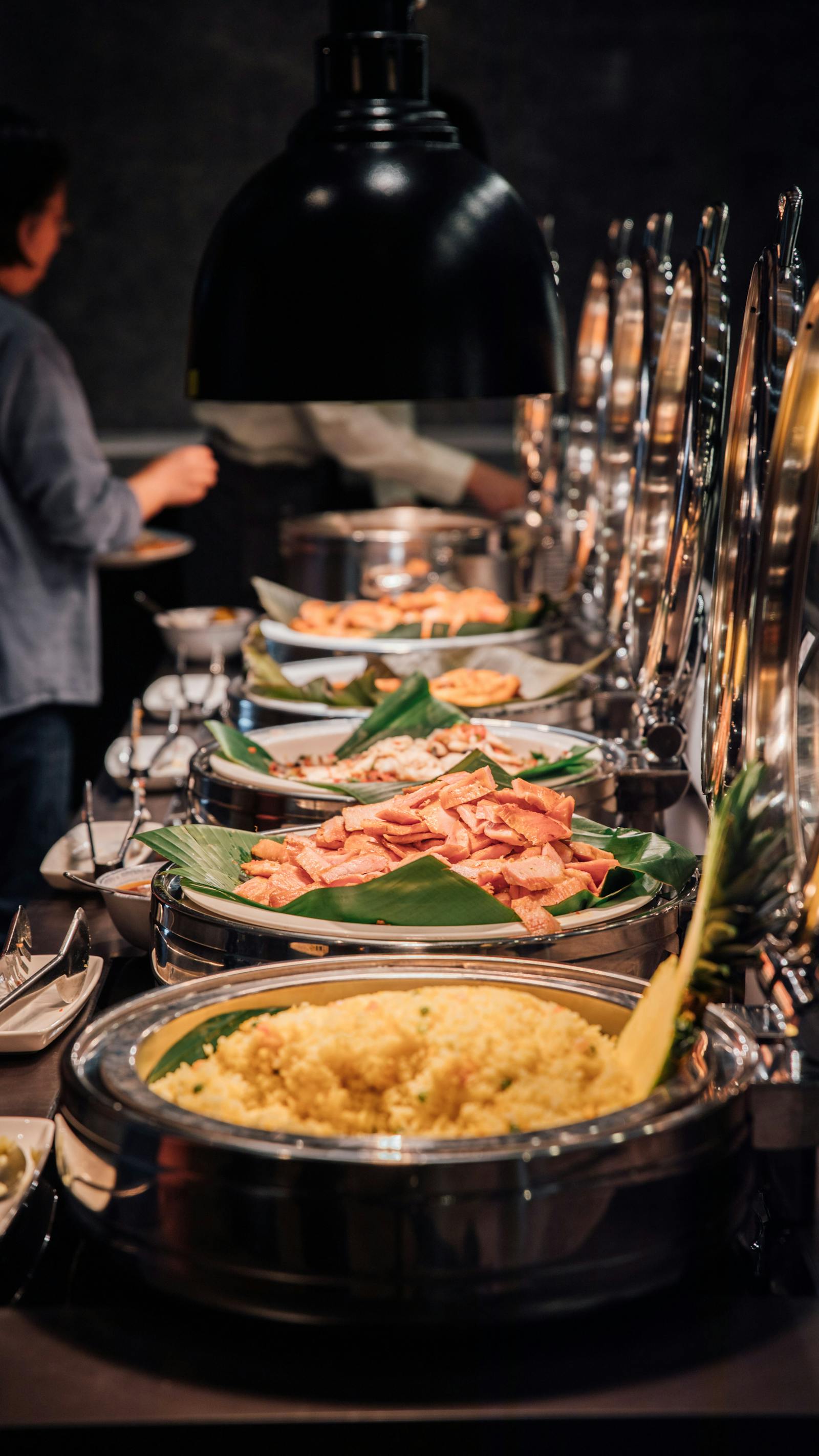
Food is displayed on serving stations and guests serve themselves, returning to their tables to eat. Usually features multiple protein options, sides, salads, and bread.
The Pros
Variety and choice. Guests can choose what they want and how much they want. Picky eaters and adventurous diners are both happy.
Social atmosphere. The act of getting up, walking to the buffet, and choosing food creates movement and encourages mingling.
Cost-effective. Buffets typically cost 15-25% less than plated dinners because they require fewer servers and allow for bulk preparation.
Dietary flexibility. With multiple options displayed, guests with restrictions can easily identify what they can eat. Labeling allergens and dietary categories helps everyone.
The Cons
Potential waste. When guests serve themselves, some take more than they eat. Caterers often prepare 10-15% extra to prevent running out, which can lead to waste.
Lines and wait times. If not managed well, buffet lines create bottlenecks. Releasing tables in groups helps, but some guests will still wait.
Temperature control. Food sitting on a buffet gradually loses its optimal temperature. Heat lamps and chafing dishes help but are not perfect.
Less formal feel. Some couples find buffets too casual for their vision.
Best For
Large guest counts (150+), casual to semi-formal weddings, venues with spacious layouts, and couples who want variety and a social dining atmosphere.
Food Stations
How It Works
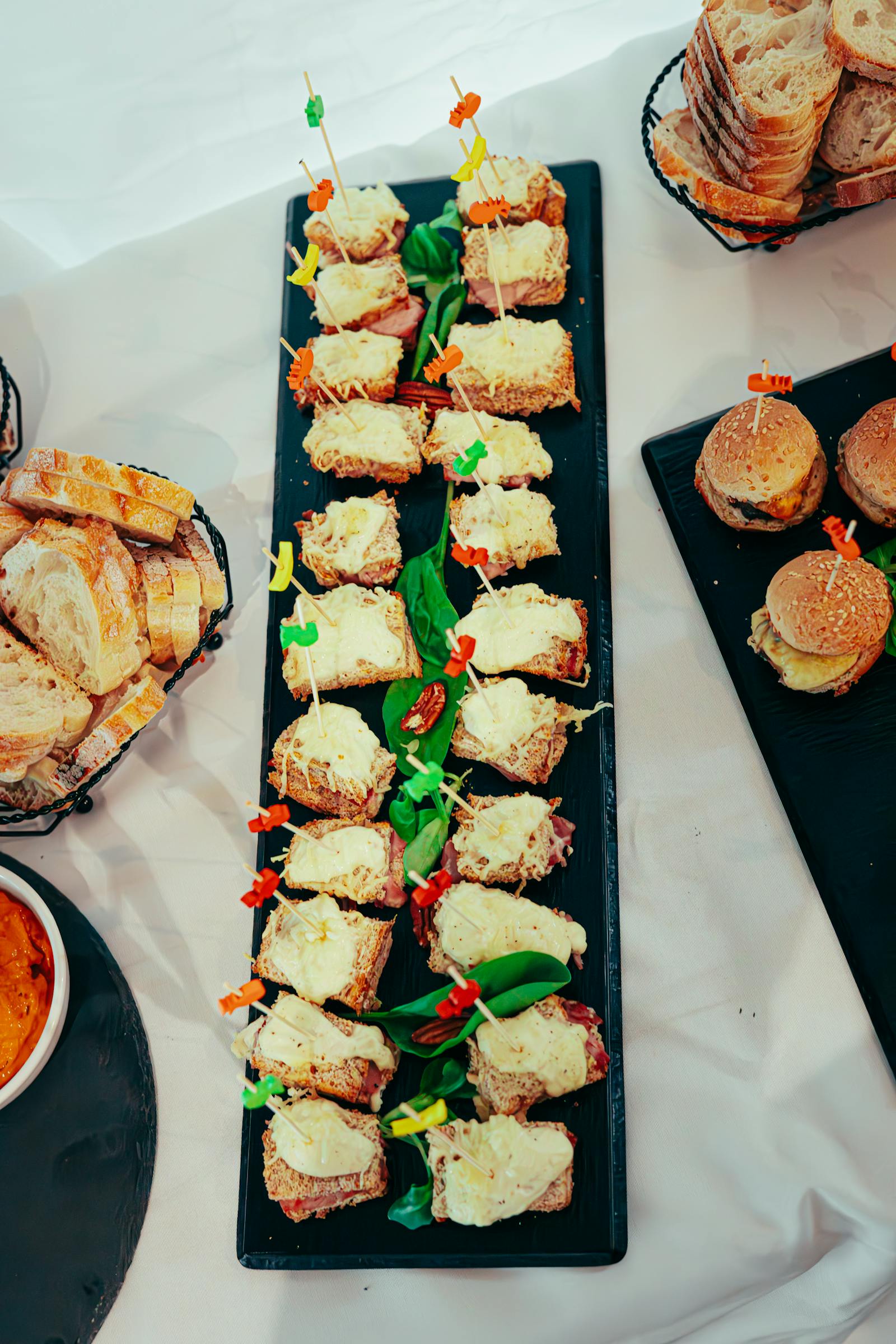
Multiple themed stations are set up around the venue, each offering a different cuisine or food type. Guests move between stations throughout the reception.
The Pros
Interactive experience. Food stations turn dining into entertainment. Live cooking stations with chefs preparing food in front of guests add excitement and theater.
Maximum variety. You can offer completely different cuisines at each station — Italian, Asian, Mexican, comfort food — giving guests a culinary adventure.
Natural flow. Stations encourage movement throughout the venue, creating a cocktail-party atmosphere that feels energetic and social.
Conversation starter. Standing around a station and watching food being prepared naturally sparks conversation between guests.
The Cons
Space requirements. Multiple stations need significant floor space. Smaller venues may not accommodate this format without sacrificing seating or dance floor space.
Higher cost. Multiple stations require more equipment, more staff, and often more food variety than a single buffet or plated option.
Uneven eating. Popular stations may have long waits while less popular ones sit empty. Guest flow is harder to predict and manage.
No sit-down moment. If you want a traditional dinner where everyone sits and eats together, stations do not provide this.
Best For
Cocktail-style receptions, food-focused couples, venues with open floor plans, and celebrations that prioritize atmosphere and experience over formal structure.
Side-by-Side Comparison
| Factor | Plated | Buffet | Stations |
|---|---|---|---|
| Formality | High | Medium | Medium-Low |
| Cost per person | Highest | Moderate | Variable |
| Variety | Limited | Good | Excellent |
| Guest interaction | Low | Medium | High |
| Timeline control | Best | Good | Least |
| Space needed | Least | Moderate | Most |
| Dietary accommodation | Moderate | Good | Best |
| Food waste | Lowest | Moderate | Variable |
Making Your Decision
Consider these questions:
- What is your wedding style? Formal calls for plated. Casual invites buffet or stations.
- How many guests? Under 100 works well plated. Over 150 suits buffet or stations.
- What is your budget priority? Buffet saves money. Stations invest in experience.
- What is your venue layout? Open spaces suit stations. Traditional rooms suit plated or buffet.
- How important is food variety? If very important, choose stations or buffet.
- What timeline do you want? A structured evening favors plated. A free-flowing event suits stations.
Hybrid Approaches
Many couples combine formats for the best of each:
- Plated appetizer with buffet main course — Formal start, casual transition
- Stations for appetizers with plated dinner — Interactive cocktail hour, formal dinner
- Buffet dinner with passed desserts — Casual meal, elegant ending
- Brunch stations — Omelet bar, waffle station, fruit display, pastry table
The best approach is the one that matches your celebration style and makes your guests feel well-fed and happy.